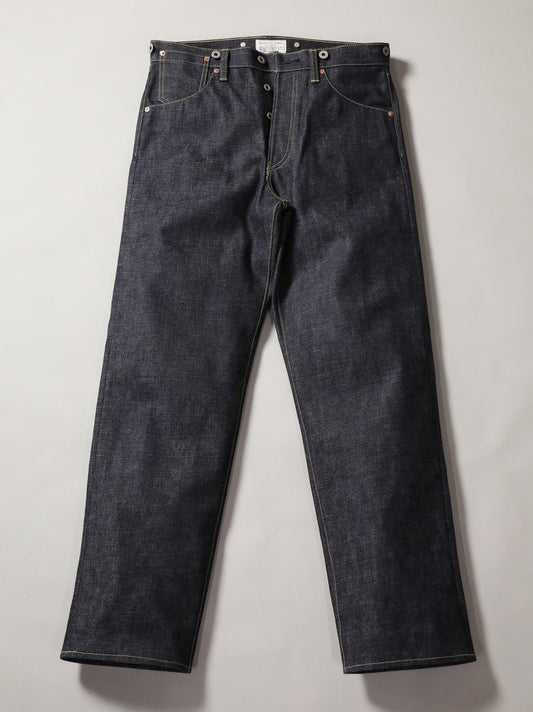
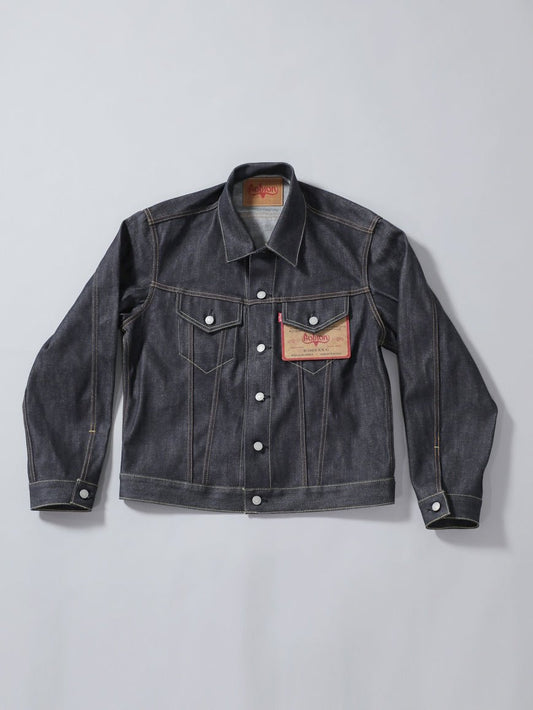
With the world buzzing over the 2026 World Cup, a question comes to mind once again.
Why is the Japan national football team’s uniform "blue"?

【From the official JFA website】
The Japanese national flag is red and white. Many other Japanese national teams, such as those for baseball, volleyball, and rugby, frequently use uniforms based on red and white.
Nevertheless, the Japan national football team is known as "SAMURAI BLUE," and blue has become firmly established as their symbolic color.
In this article, using "SAMURAI BLUE" as a starting point, we would like to trace the history of the color blue—from its significance in Japan and the world, to the indigo blue that symbolizes jeans—from the unique perspective of Bobson, a jeans manufacturer.
Since when has the Japan national football team worn blue?
The history of the Japan national football team wearing blue uniforms dates back about 100 years.
In 1930, at the 9th Far Eastern Championship Games held in Tokyo, the Japan national team is said to have worn light blue shirts.

【Image】
At that time, the core of the national team consisted of players from Tokyo Imperial University (the present-day University of Tokyo).
Therefore, one theory suggests that the team color of Tokyo Imperial University, "light blue," was adopted for the national team's uniform.
On the other hand, old documents belonging to Mr. Tanabe, a former vice-president of the Japan Football Association, contain a description suggesting that the blue of the national team was chosen because "the sea surrounding the national flag was viewed as blue."
Japan is an island nation surrounded by the sea.
This is the idea that blue was used in the uniform to represent the sea surrounding the rising sun flag.
In other words, the blue of the Japan national football team appears to overlap both the historical background of the Tokyo Imperial University's light blue and the symbolic meaning of the sea that surrounds Japan.
The national team hasn't always worn blue
However, the national team's uniform hasn't always been blue over the last 100 years.
There was a period when the uniform was changed to a red and white base to match the Japanese national flag, driven by the argument: "Why is it blue when it's the Japanese national team? Shouldn't it be red and white, the colors of the national flag?"
However, the team's performance during that era was not very good, and the uniform eventually returned to blue.
Since then, blue has gradually become established as the image of the national team.
In 2006, the term "SAMURAI BLUE" began to be used, and today, the image of "Japan national team equals blue" and "Japan national football team equals SAMURAI BLUE" is shared by many.
Blue was a familiar color to the Japanese people
The blue of the Japan national football team is a color that has become established within modern sports culture.
However, blue has long been a color very familiar to the Japanese people.
The most representative example of this is indigo dyeing (aizome).
Awa Ai, which developed particularly in Tokushima Prefecture, is indispensable to the story of Japanese indigo dyeing culture.
The techniques of indigo dyeing were polished over a long time, and clothing dyed with indigo spread throughout Japan.

It is said that in Edo-period Japan, indigo-dyed clothing was widely used.
Stories remain of people from overseas visiting Japan and admiring the beauty of the blue clothes worn by the Japanese, calling it "Japan Blue."
Also, Japan has a deep indigo color known as "Kachi-iro."
This is not brown in the modern sense, but an indigo dyed so deeply that it is nearly black.
This "Kachi-iro" is said to have been favored by samurai as an auspicious color because it sounds like "victory" (kachi).
Furthermore, there is a theory that even during the Sino-Japanese and Russo-Japanese Wars, deep navy blue was referred to as "gun-sho-shoku" (the color of military victory).

【Nishiki-e print depicting the Japanese military during the Sino-Japanese and Russo-Japanese Wars】
In Japan, blue was more than just a color.
It was the color of indigo, the color of everyday life, and a color that represented a wish for victory.
Was blue a disliked color in Europe?
On the other hand, looking at the world, how blue was perceived has changed significantly throughout history.
Today, we associate blue with feelings of freshness, sincerity, intelligence, and cleanliness.
However, in ancient Europe, blue was not necessarily a preferred color.
For the people of ancient Rome, blue was also a color associated with the "other."
It was linked to foreign tribes in the north, pagans, and the Gauls and Germanic peoples who invaded Rome.
The image of their blue eyes and their flashily dyed blue clothing is said to have been associated with eeriness and fear for the Romans.
Furthermore, blue was sometimes associated with death and the underworld.
It took a long time for it to be accepted as a "beautiful" or "noble" color as it is today.
The Virgin Mary's mantle turned blue into a noble color
A major turning point in the history of blue occurred in medieval Europe.
Particularly important are the paintings of the Virgin Mary.
Starting around the 12th century, vibrant blue began to be used for the Virgin Mary’s mantle, and the image of the color blue changed dramatically.

Philippe de Champaigne, "The Sorrowing Virgin"
Until then, blue was not necessarily a noble color.
However, because blue was used for a divine entity like the Virgin Mary, it was suddenly accepted as a special color.
Why was blue used?
One reason is that blue pigment at the time was extremely rare and expensive.
It is thought that blue was chosen with the intention of making the paintings of the Virgin Mary themselves more valuable by using rare and costly paints.
As a result, blue came to be valued as a holy, noble, and beautiful color.
Eventually, blue became loved by royalty and nobility, and spread to the clothing and lives of common people.
The images of "refined," "intelligent," and "clean" that we associate with blue today may be built upon this long accumulation of history.
Why are jeans blue?
Finally, let's think about the blue most familiar to Bobson: the indigo blue of jeans.
The origin of jeans lies in the workwear of the American Gold Rush era.
What workers in the gold mines needed was clothing that was durable, tear-resistant, and would not easily show dirt.
Regarding the origins of jeans, the story that "they used durable fabrics like tents or canvas" is often told.
What is important is that jeans were originally practical clothing for laborers.
So, why was this workwear dyed blue?
One theory is that natural indigo dye was thought to have insect-repellent properties.
There was also a practical benefit: dyeing it blue made dirt and stains less visible.
Above all, denim dyed with indigo fades as you wear it, changing into an expression unique to the wearer.
The deep blue when new.
The fading that occurs little by little as one works, walks, sits, and lives.
A person's time is etched into a single pair of jeans.
Isn't this one of the reasons why the blue of jeans has been loved by so many people?
Soccer, history, and fashion are connected by "blue"
The blue of the Japan national football team.
Japanese indigo dyeing.
The blue that became a noble color in Europe.
And the indigo blue that symbolizes jeans.
Worlds that at first glance seem separate are linked in a surprisingly single line when viewed through the color "blue."
Blue is not just a color.
In one era, it was feared; in another, it became a color of prayer; in another, a color of victory; and in yet another, it became a color symbolizing the clothes of the working class.
The next time you see the SAMURAI BLUE of the Japan national football team...
And the next time you see the indigo blue of your jeans...
I would be happy if you could also give a little thought to the history and culture behind that blue.
〇References
・"The Story of Color: Blue"
・"A Pictorial Book of Blue"