When you think of a cool pair of jeans, what comes to mind?
Faded colors that look well-worn, or perhaps a few small rips from who-knows-where.
These are essential design elements for stylish jeans.
In this article, we’ll explain everything from the mechanics of fading to how to achieve a beautiful, professional-looking fade for your own pair of jeans!
If you want to break in your jeans to match your personal style, please use this as a guide.
To enjoy a beautiful fade, choose your denim type carefully

Before learning how to achieve a beautiful fade, let’s go over the basics of which jeans to choose if you want to enjoy the fading process.
While there are many types of jeans, they can generally be categorized into three groups regarding "fading":
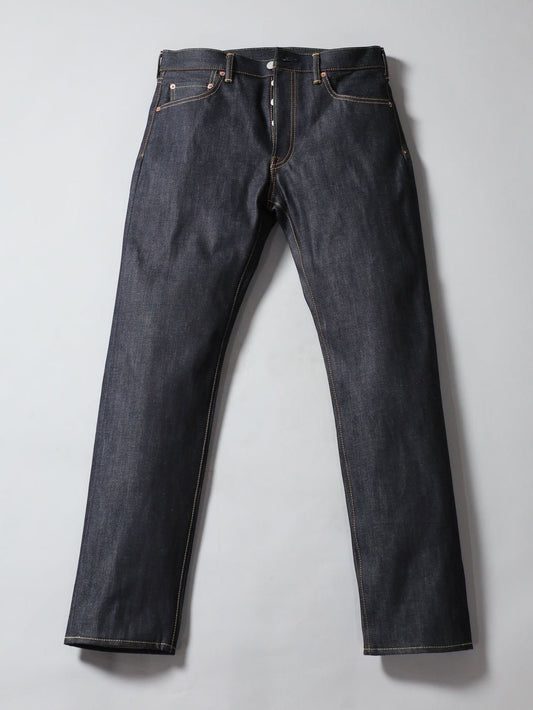
・Raw denim (rigid denim): Unwashed and unprocessed, without anti-shrink treatment.
・One-wash: Jeans that have been washed once during the manufacturing process.
・Aged/Distressed: Jeans that have had a fading effect applied from the start.
However, you must be careful when purchasing raw (rigid) denim. Since they will shrink when washed, it is best to buy a size larger than usual, anticipating that they will fit differently once you wash them for the first time.

Why do jeans fade? Understanding the mechanics of indigo

Do you know why jeans fade in the first place?
Understanding the reason behind the fade will help you figure out exactly how to achieve the look you want.
To understand fading, you must understand the nature of "indigo," the dye used in denim.
Jeans are made from cotton yarn that is bundled into ropes and dyed with indigo.
Indigo was highly valued in the 1890s, when jeans were first created as workwear, because it also had natural insect-repellent properties.
However, indigo dye is delicate:
・It is sensitive to water and peels off easily.
・It is sensitive to friction.
・It does not react well to direct sunlight.
Because it is such a delicate dye, simple daily actions and movements are often enough to cause fading.
In other words, indigo fades due to routine washing, friction in the dryer, and direct sunlight when hanging them out to dry.
To control how your jeans fade, your laundry, spin-drying, and drying methods are crucial.
4 key points for achieving a beautiful fade

There are four points you should know to ensure your jeans fade beautifully.
Start by mastering these four basics:
① Properly remove the starch (sizing).
Most jeans dyed with indigo come with starch applied from the factory.
This is done for various reasons, such as to prevent the indigo from peeling off or to keep the fabric from shifting during sewing. However, removing the starch will change how the fabric fades.
Some enthusiasts prefer "hard-wear" (wearing them without washing for a long time) to let the fades develop naturally. However, depending on how long the jeans have been in storage, there may be impurities on the fabric that prevent clean fade patterns (atali) or cause color transfer to other items. Therefore, we recommend removing the starch if you want a clean, aesthetic fade.
Here are the specific steps for removing the starch:
How to remove the initial starch
- Prepare a large amount of water or lukewarm water (30–40°C is ideal) and soak the jeans for about 10 minutes.
- Wash them by gently swishing them in the water while keeping them as flat as possible. Depending on the size of your container, do this for about 10 minutes to ensure all the starch is removed.
- Gently remove the water. Knead them carefully until water no longer drips from them. *If you use a spin-dryer, do so only once for 10 to 15 minutes.
Smooth out the wrinkles thoroughly and hang them to dry in the shade.
② Try to avoid unnecessary wrinkles when not wearing them.
The "atali" (fade patterns) that develop through your daily life create a beautiful, authentic look.
However, if wrinkles form while the jeans are being stored or drying, they can lead to unintended fade patterns. When you aren't wearing them, try hanging them up properly.
③ Be careful with detergents and bleach.
There are many opinions—such as "use bleach for a chemical-wash look" or "use neutral detergent for faster fading"—but once the indigo is removed, you can never get it back.
Common detergents sold in stores often contain harsh chemicals designed to remove dirt quickly. These chemicals are too strong for delicate indigo dye, which is already sensitive to water and friction, and will accelerate fading too aggressively.

B-1969-XX-J Selvedge Straight Denim
Ingredients that are especially likely to speed up fading include:
・Optical brighteners: These absorb UV light and emit white light to make clothes appear whiter. While they are great for brightening dull clothes, they will cause the indigo on your jeans to fade and turn white much faster.
・Bleach: Like optical brighteners, this will turn yellow or dull fabrics white. It will strip the color from your jeans.
If you want to remove daily dirt and odors while preserving a beautiful fade, we recommend using "detergent specifically for jeans."
Jeans-specific detergents are primarily soap-based and designed to prevent unnecessary loss of indigo. They contain no optical brighteners, bleach, or harsh surfactants/enzymes that can damage the fabric. Made mostly from natural, alkaline-based ingredients, they clean effectively without stripping the color, so you can use them with peace of mind.
④ Just keep wearing them!
The fade patterns on jeans are a reflection of the life and history of the person wearing them.
Instead of being overly cautious and worried about the color, wear your jeans naturally as you go about your life. This is how your own unique fade will develop.
To achieve a beautiful fade, simply wear them everywhere and enjoy the process of creating your own one-of-a-kind pair of jeans.
How to wash, spin, and dry for a beautiful fade

Knowing how easily indigo dissolves in water might leave you wondering, "How should I wash, spin, and dry them?"
However, by learning the proper way to wash your jeans, you can maintain a clean, crisp fade or, conversely, guide the fading process to your personal preference.
Here are the step-by-step procedures for both "if you don't want them to fade" and "if you want to encourage fading."

How to wash, spin, and dry if you don't want your jeans to fade
If you want to keep your jeans the way they are, you need to wash them with minimal strain on the fabric.
Here is a step-by-step breakdown:
Washing
▼If using a washing machine, we recommend the following steps:
① Wash them inside out, without putting them in a laundry net.
② If you need to clean them, use a jeans-specific detergent. Avoid anything with optical brighteners or bleach. If they aren't very dirty, a simple water wash is fine.
③ Use a gentle cycle (delicate or "fashion garment" mode). Strong water currents will damage the fabric and strip more indigo than necessary.
④ Spin-dry for the shortest possible time (5–10 minutes). Remove them immediately once finished to prevent wrinkles.
▼If hand washing, we recommend the following:
① Prepare a large amount of water or lukewarm water.
② Soak for 5–10 minutes. While you can wash without detergent, using a little bit of jeans-specific detergent helps clean them more effectively.
③ Gently press with the palms of your hands to clean.
④ To remove water, press gently. Never wring or squeeze forcefully, as friction will cause patchy fading. Continue pressing until water no longer drips. While it takes more time than a machine, doing it carefully is better for your jeans.
Drying
Stretch out the waist area to prevent wrinkles, then hang to dry in the shade.
By properly smoothing them out and shaping them while drying, you ensure that "whiskers" (fades in the crease) and "honeycombs" (fades behind the knee) form in the same position every time, preventing the fade from becoming misaligned.
Use your palms to smooth out the fabric as much as you can.
Washing if you want them to fade
Wash them right-side out without a net on a normal cycle. Again, use a jeans-specific detergent. Unlike when you don't want them to fade, washing them right-side out causes more friction in places that don't usually wear out, resulting in a unique, different fade pattern.
If hand washing, use a jeans-specific detergent and wash them right-side out. Try to knead the entire garment gently rather than scrubbing one spot, which can lead to uneven fading.
Spin-drying
Spin-dry once for the shortest possible time. As with the non-fading method, spinning is hard on the fabric, so keep it to a minimum. Remove immediately once finished.
Drying
Hang to dry, making sure to smooth out any wrinkles.
Indigo also fades in direct sunlight. If you want a "sun-bleached" look or specific fade effects, some people choose to sun-dry for limited periods. However, be aware that direct sunlight damages the fabric itself, so avoid excessive exposure.

Enjoy fading jeans that are unique to you!

Many people are drawn to jeans because they understand the joy of watching them fade and crafting a pair that is uniquely their own.
Recalling memories based on how the wear patterns appear, or feeling excited about the new creases forming—this experience of "growth" is something you just don't get with standard store-bought clothes.
We hope you enjoy finishing your very own pair!
If you are interested in washing jeans, please check out the video below!